Fun Facts About Dogs

1. Dogs can recognize nearly 200 words!

Dogs have always been recognized as high IQ animals. They can not only recognize simple words, but they can also remember the texture of some toys. There was a research report showed that Dogs can put toys that are made of different materials into designated places according to instructions.Ordinary dogs can understand an average of about 200 words. However, dogs such as Border Collie, Poodle, German Shepherd, Golden Retriever, and Doberman, which have relatively high IQ, can understand about 250 words.

2. Dogs can dance!

Most of the dogs are sensitive to rhythm. Although their limb movements are not all actively controlled by the brain, they still have conditioned reflexes when the bass drums stimulate the nerves. 

3. Dogs have a fabulously sensitive sense of smell that can detect the signatures of  numerous types of cancer.

This may sound unbelievable, but it’s a fact, not a novel. Dogs can sniff out a cancerous owner whose blood sugar rises and falls, and use their paws to tap, tongues to lick, bark, or even growl to warn his owner that his blood sugar is dangerous. Some dogs are even trained to serve cancerous people. Depending on how well they are trained, they are about 90% accurate in measuring hypoglycemia. 

4. Dogs have benevolent hearts.

Studies have shown that gentle and harmless big dogs will have a strong affection for smaller animals or kids. For example, dogs will help humans to take care of their newborn babies, or surround cats with their bodies to warm their bodies up.

5. Dogs will be in love with other dogs!

Can two dogs develop a love relationship? Or will they have a love relationship with humans? Dog researchers have found that dogs can have a relationship with their opposite sex.  It was also found in research that a dog that has been domesticated for a long time may have a love-like emotion to its owner.

Fun Facts About Lions

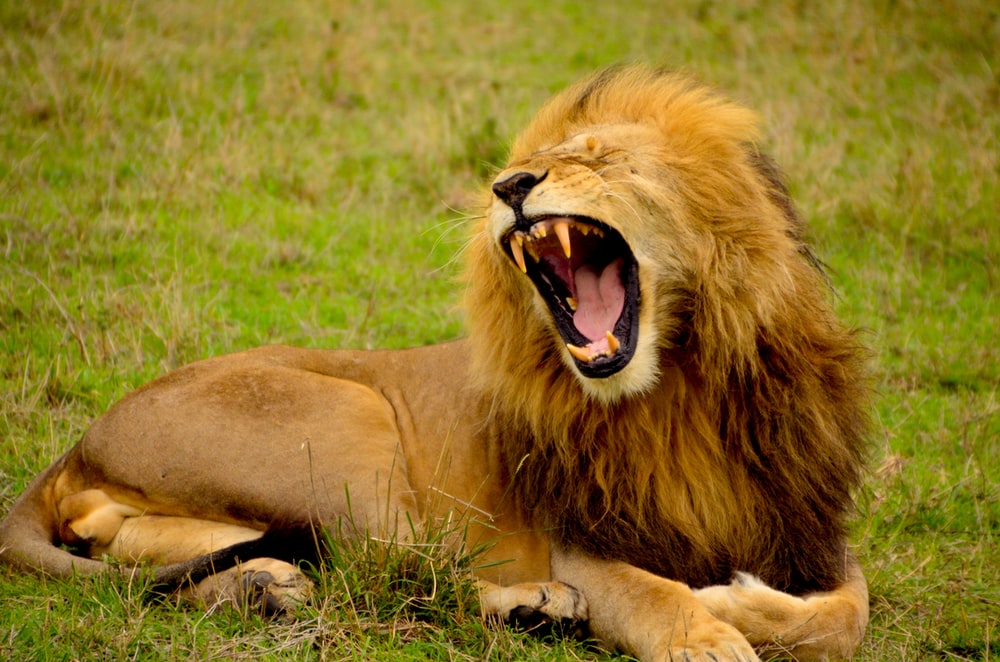
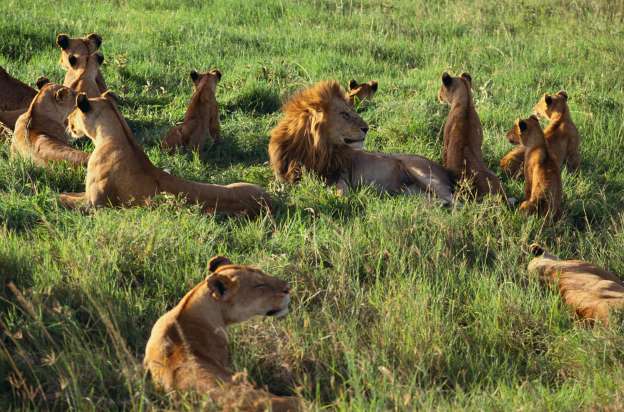
When it comes to lion, many people will think of the Simba in “Lion King,” but how much do you know about lions? Lions are feline animals that are seen as a symbol of power, fierceness, and strength.

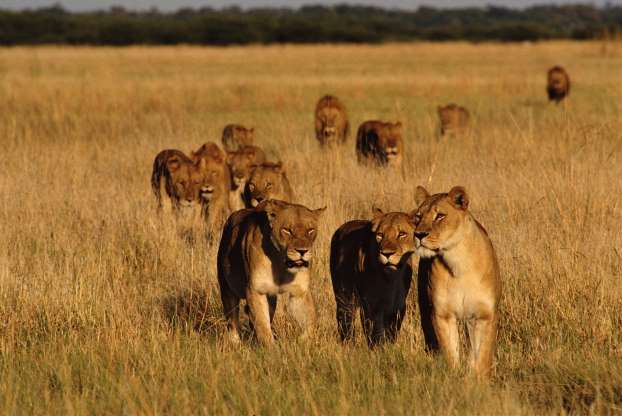
1. Compare with other feline animals, lions have better communication skill. They are carnivores that live in groups. There are some female lions that are blood-related, cubs, and few male lions in a pride. 

2. When there is a new male leader in a pride, it will kill all the cubs. Only leaders can have mating right. Those cubs are the descendants of the formal leader, so the new leader has to mate with the female lions for the next generation.

3. Lions have the biggest roar sound in the feline family. The roar of an adult lion can reach eight kilometers away. It’s often the communication signal between prides.

4. Lions are the only felines that can tell the gender at a glance. Male lions have a thick mane, but female lions don’t.

5. Since lions don’t have many sweat glands, they do not have much activity during the day and can sleep for 16 to 20 hours a day in order to lower their body temperature. Their claws are flexible and their eyesight is extraordinary at night, so hunting activities are often performed during the period after sunset and before sunrise.

6. Female lions usually do most of the hunting while males defend the pride’s territory and the females that are hunting. Despite this, male lions eat first.

6 Fun Facts about Cats

Cat is one of the most popular pets. Although cats aren’t as loyal as dogs to their owners, they often do some cute acts and make us fall in love with them. There are 6 fun facts about cats that you may not know.

1. Cats can detect the tastes in the air

Cats are said to be the only mammal that can not taste sweetness, but they can detect the tastes in the air. It can enhance their appetite when the odor in the air goes into their mouths. 

2. Cats meow to talk to humans

Cats meow only when they are communicating with humans, not each other. But kittens will meow to give signals to their mother.
3. Cats have the largest proportion of eyes of all mammals
Compared with the whole face of the cat, the proportion of the eyes is very large, ranking first in all mammals.  Although cats have cute big eyes, they actually have myopia, but their edge vision and night vision ability are excellent.

4. Cats are really sensitive to vibration

It is said that cats can induce ten to fifteen minutes before an earthquake happens.

5. Cats are said to have nine lives

The highest record of a non-lethal fall is a cat that fell from a 46-story apartment and survived.  Of course, there are still many examples of cats falling from heights and unscathed. This is why we say that cats have nine lives.

6. Cats can filter the salt in the water

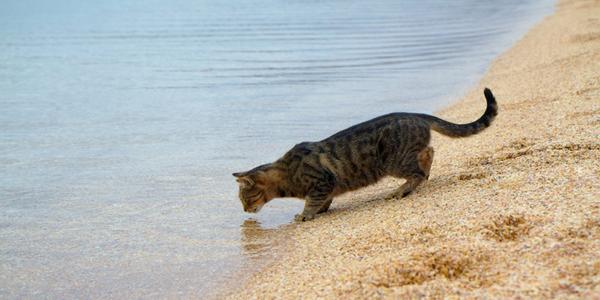
Cats can drink seawater directly, but humans can’t.  It is because the structure of a cat’s kidney is special, it can filter out excess salt in the water.

10 Fun Facts about Tigers

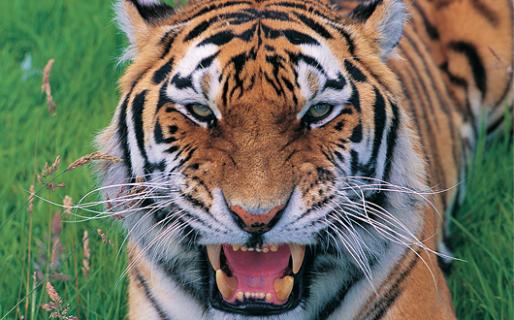
Tigers are animals that everybody knows, but there are 10 fun facts about tigers that you may not know.

1. Tigers have round pupils

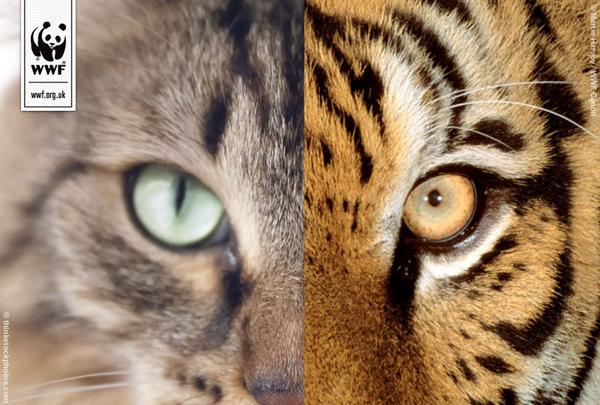
Cat and Tiger are both feline animals. However, the shape of their pupils is different. Cats’ pupils are sometimes vertical slit when they exposed to light. Tigers’ pupils are always round. Both cat and tiger are nocturnal animals, but cat isn’t strong enough, so it needs to have clear sight under the light. Tiger is strong and fierce, it doesn’t need to worries about external interference. It just needs clear sight at night in order to hunt.

2. Tigers seldom roar.

Tigers roar when they are communicating with other tigers that are far away. When they are threatened, they will hiss like cats.

3. Tigers are generous.

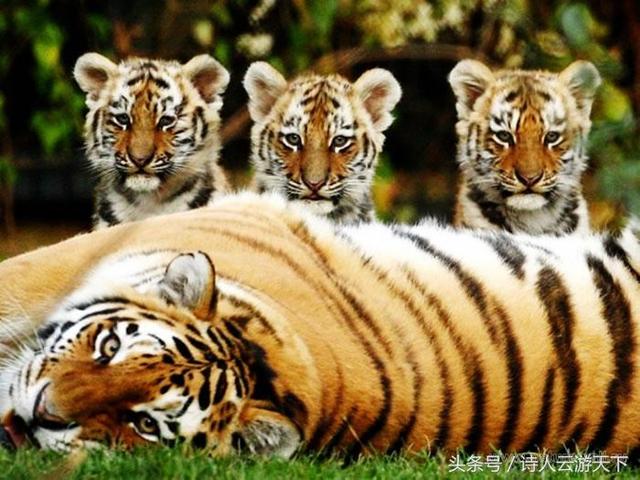
Unlike lions and other cats, male tigers always let female tigers and cubs eat their prey first, they even share their prey with other male tigers.

4. Every tiger’s strip is unique.

Every tiger’s strip and pattern are one of a kind, just like a human’s fingerprint.

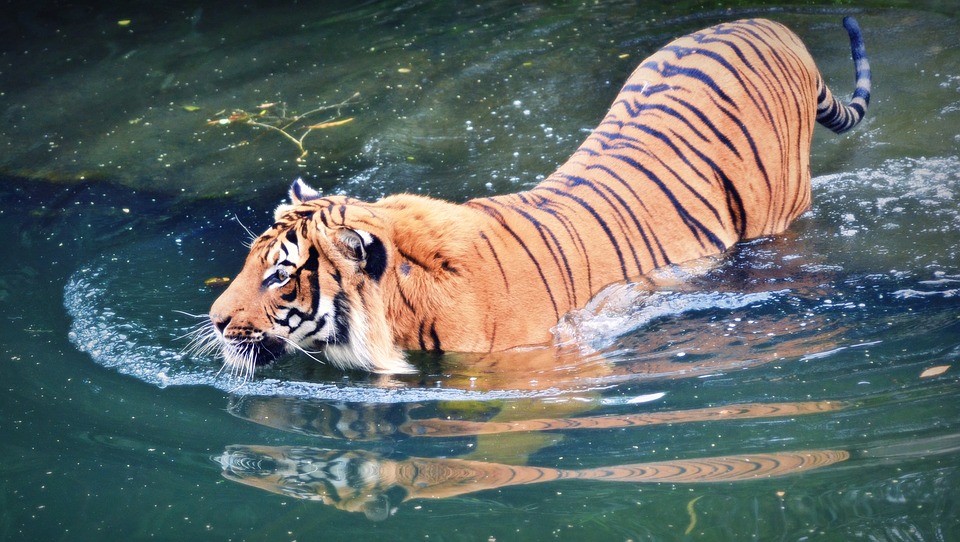
5. Tiger loves swimming in the water.

Most of the feline animals hate water, but tiger loves it. They enjoy playing and bathing in the water.

6. Tigers can’t purr.

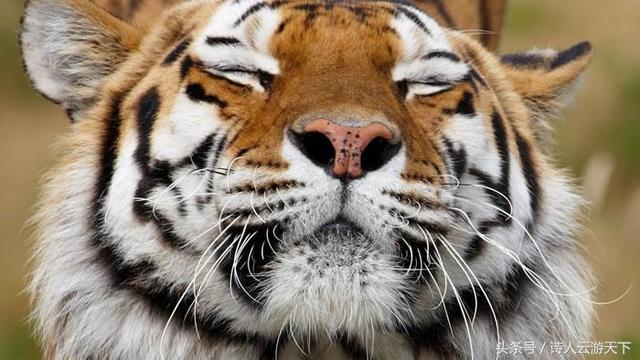
Cats usually purr when they are happy, but tigers can’t purr. Tigers show their happiness by squinting or closing their eyes.

7. Tigers can imitate the prey’s voice.

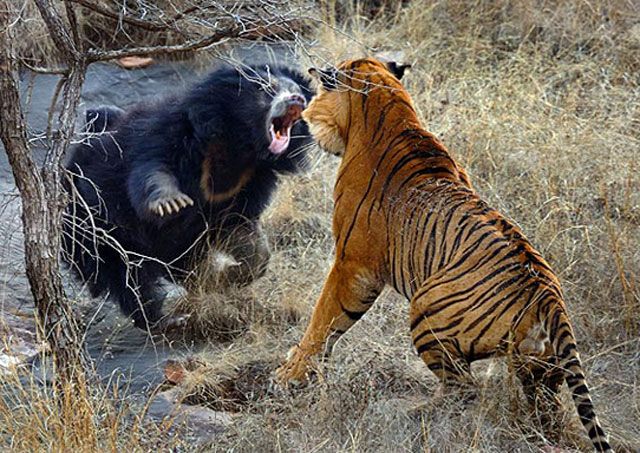
Tigers can mimic the sound of bears calling their companions to attract bears and hunt them.

8. Tigers have anti-infective saliva.

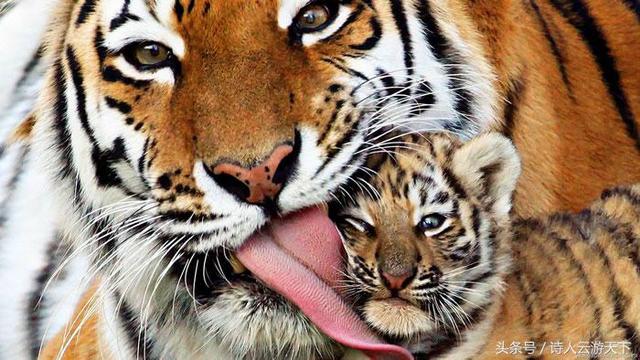
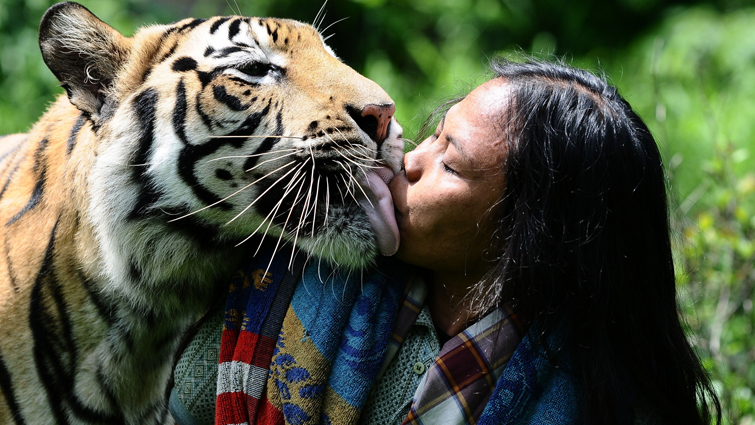
When a tiger licks a wound, the saliva is not only clean, it also disinfects the area.

9. There are only 3,500 tigers are in the wild

The number of tigers being penned in the United States is far more than those roaming in the wild.

10. Tigers don’t ordinarily view humans as prey.

Tigers usually attack humans only when they feel threatened. But we still can not deny that fact, there have been records of tigers killing people in rustic places. It is best to walk backward and keep your eyes on the tiger when you run into such a situation.

Giraffes

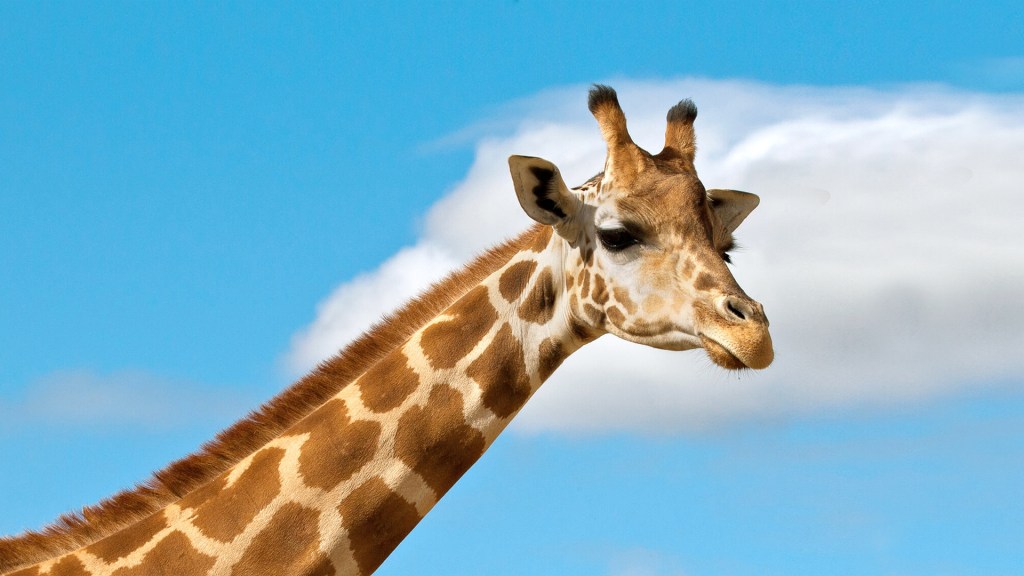
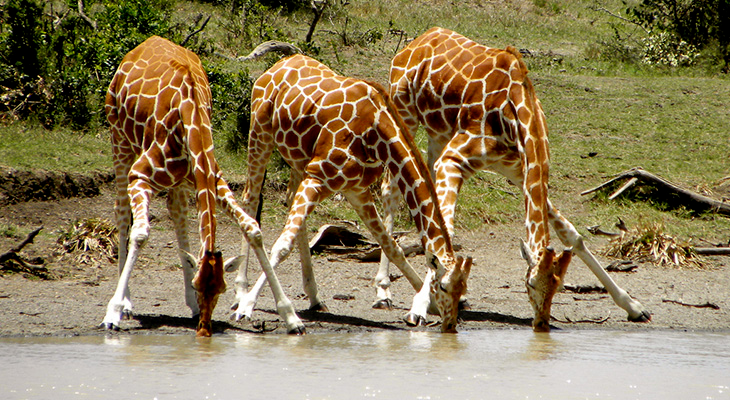
The giraffe is up to 18 feet tall and is the tallest of the four-legged animals. On the pale yellow background, there are brown plaques of different sizes and sizes. Each subspecies (shared into 8 subspecies) has different shapes of markings. The color of the markings will become darker with age, while the abdomen color is light and without markings. They have fluffy tails and 1-2 pairs of horns on the head. They are the only animals that have horns at birth, and with increasing age, their horns can be as many as five. Their tongue is long, their eyes are large, their eyelashes are long, their neck and limbs are long, and the female has four breasts.

When the giraffe walks, the head and neck swing forward and backward, pushing the body forward, which can make the body which weighs one ton forward. A giraffe can runs at speeds up to 35 mph and the neck swings back and forth with the pace. Its body is so large that it is not easy to stand up in a lying position, so they usually stand and sleep.

Giraffes can eat a variety of different trees, but mainly eat acacia leaves. Giraffe’s stomach is divided into four rooms, the half-digested food is spat back to a ruminant, and each small piece of food is chewed 40 times. Giraffes are kind and timid to other animals. Although they may gather about 20 giraffes to get together, the group organizations are lax.

Elephants

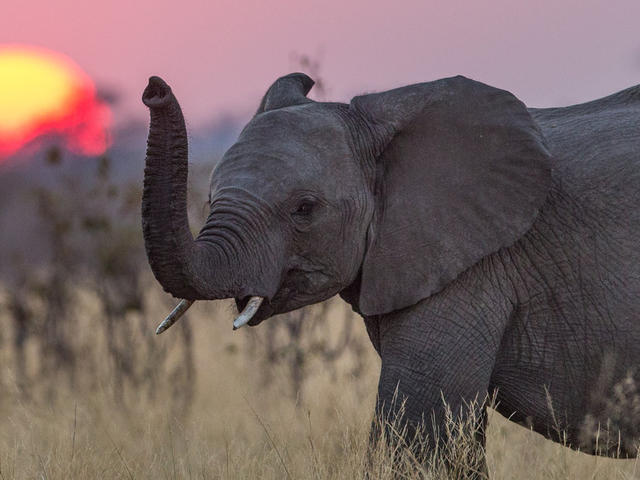
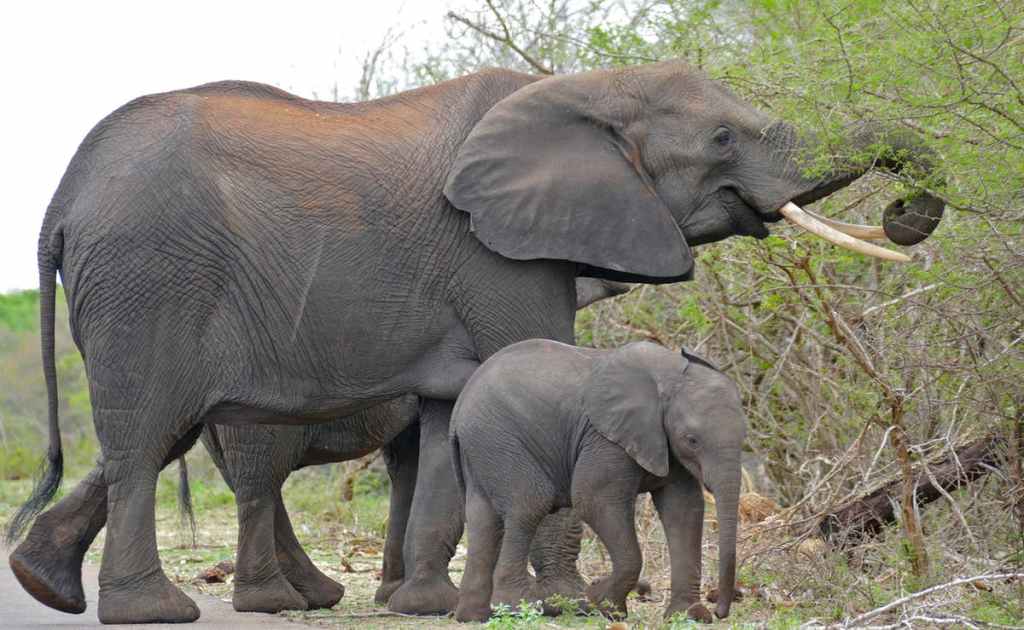
The elephant family once flourished during the cenozoic era of the geological time, with more than 400 species and footprints almost all over the world. However, it is unfortunate that there are only two kinds of elephants left – Asian elephants and African elephants. Elephants use long noses to climb branches, smash the trees, and strip the bark of other trees to let the trees wither. In this way, the elephant turned the forest into an open woodland, making the wildfires prone to happen, and finally turning that zone into a treeless plain. But what the elephant does is not entirely destruction.

In several ways, elephants also make that place rich, thus making other animals easy to survive. The elephant left some fallen trees and broken branches, allowing the animals eating the leaves to get extra food, digging in the dry riverbed, and there will also be water supply during the dry period.

In order to support a huge body, the total weight of the food that an elephant eats is about five percent of the body’s weight every day and drinks about forty gallons of water. They can absorb two gallons per breath. In places where the trees are scarce, the elephant’s food may be grass, but in areas with trees, the elephants mainly eat branches and leaves. Elephants like to dig tree roots from sandy soil and chew the roots to eat the sap inside. The elephant’s nose is sensitive, smelling the roots buried in the ground, first digging the mud with the forefoot, then picking up the roots with long teeth.

Polar Bears

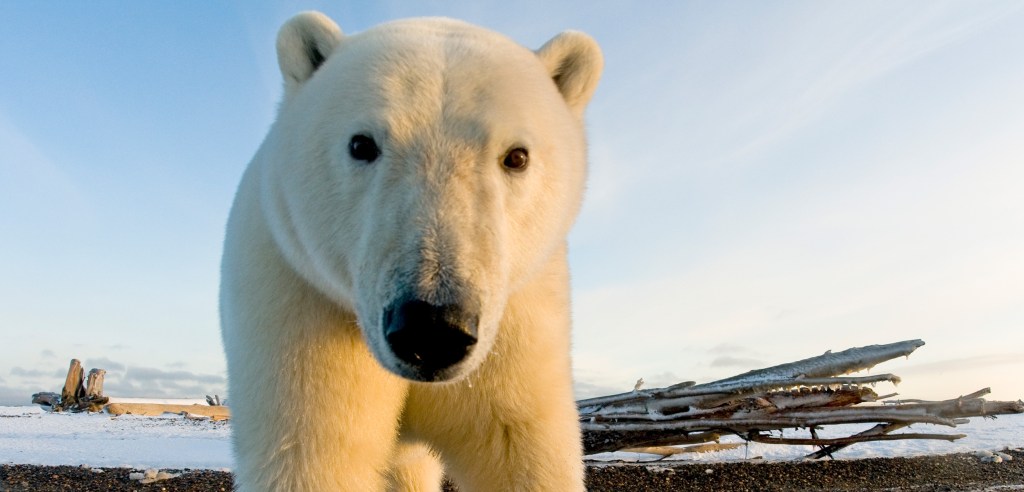
Polar bear, also known as the white bear, is a bear growing in the Arctic. It is the largest carnivorous animal on land. In the space where polar bear lives, it is the top layer of the food chain. It has very thick fat and hair to keep warm. Its white appearance is a good protective color on snowy white. The Polar bear can capture food not only on land but also at sea. These features make them able to survive in the harsh climate of the Arctic.

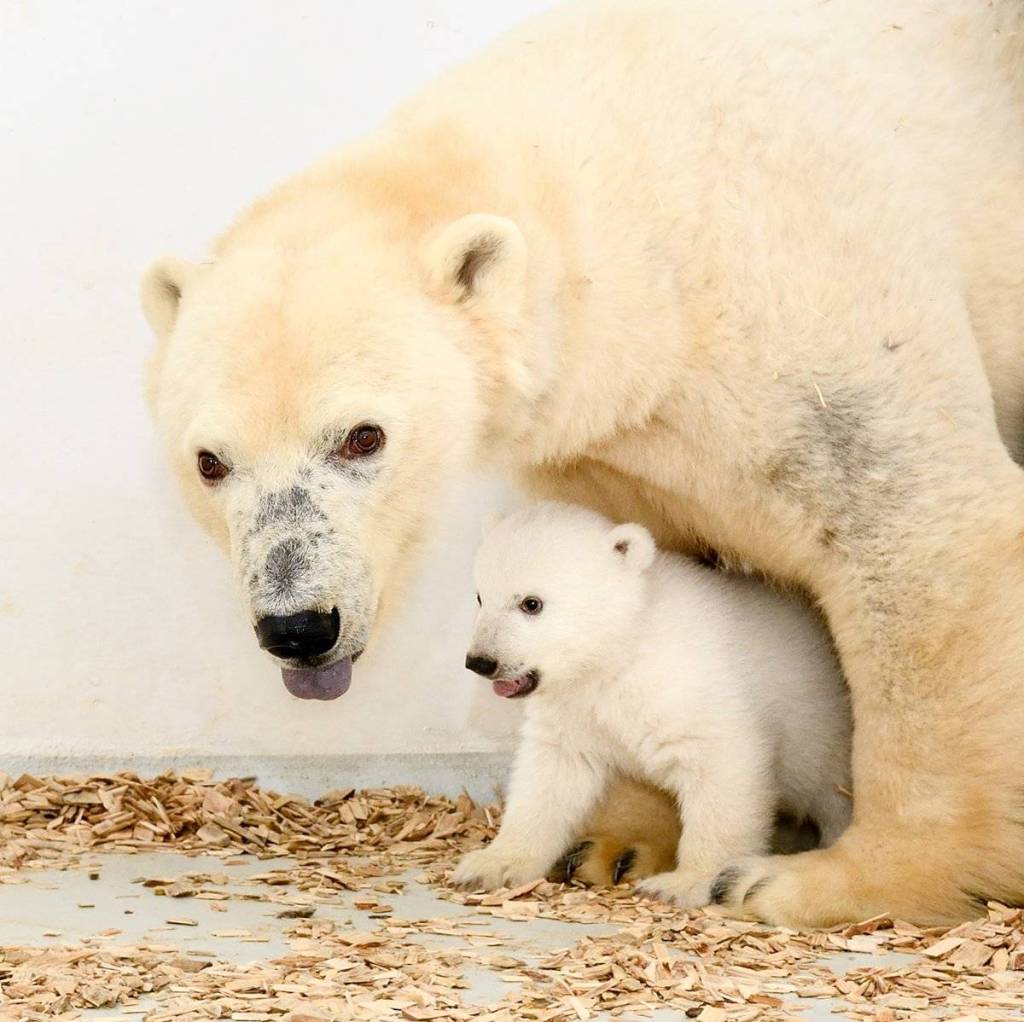
The polar bear’s hair is transparent. It looks white because of the refraction of the sun. The white fur can make the polar bears track and assault their prey on the ice. The young polar bear’s fur is pure white, which can help camouflage and hide. When it grows up, the fur will slowly turn into a light yellow color.

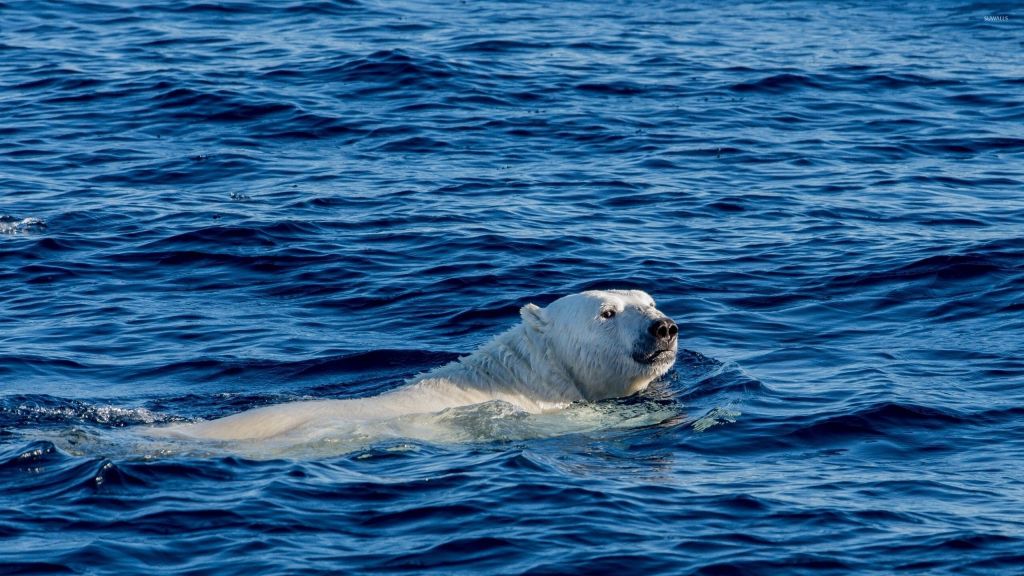
Polar bears are good swimmers. They can be found in the ocean at which is miles away from the mainland. This may be the signal that they began to evolve to capture prey in the sea, but recent evidence suggests that the melting of the glaciers caused by the greenhouse effect has forced them to make choices. They are also highly efficient in hunting on land. This is because they run at a very high speed, they even run faster than humans. The polar bears can run up and rushed to a speed of 60 kilometers per hour, but they could not last long, only a short distance sprint. Polar bears’ claws are like iron hooks, and their teeth are extremely sharp. With its forefoot flapping, it can easily smash a person’s head off.

Different Kinds Of Panthers

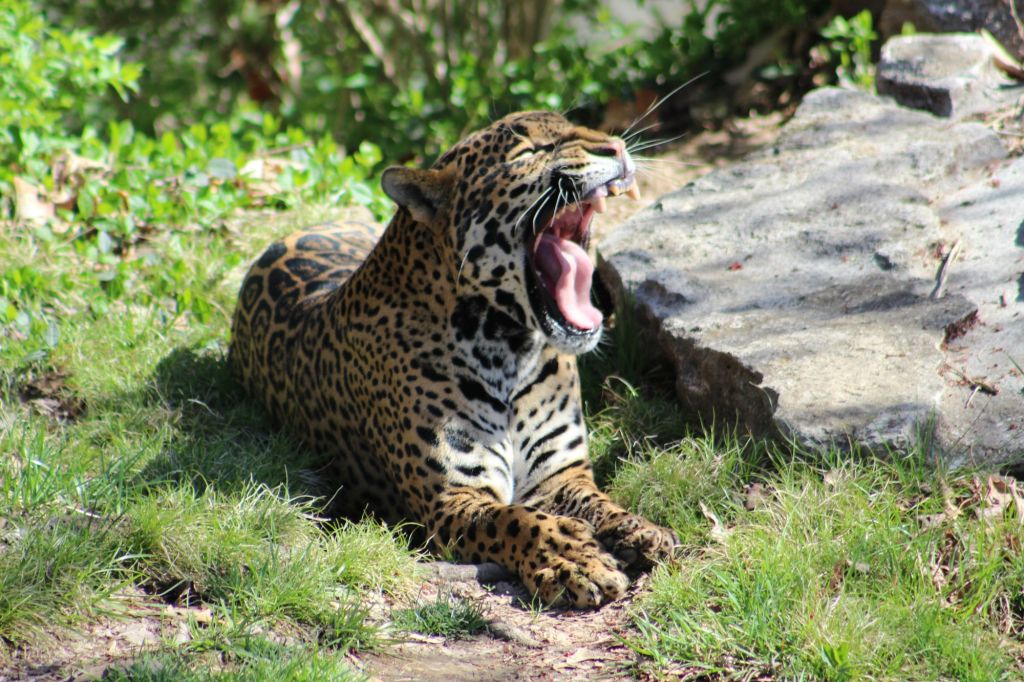
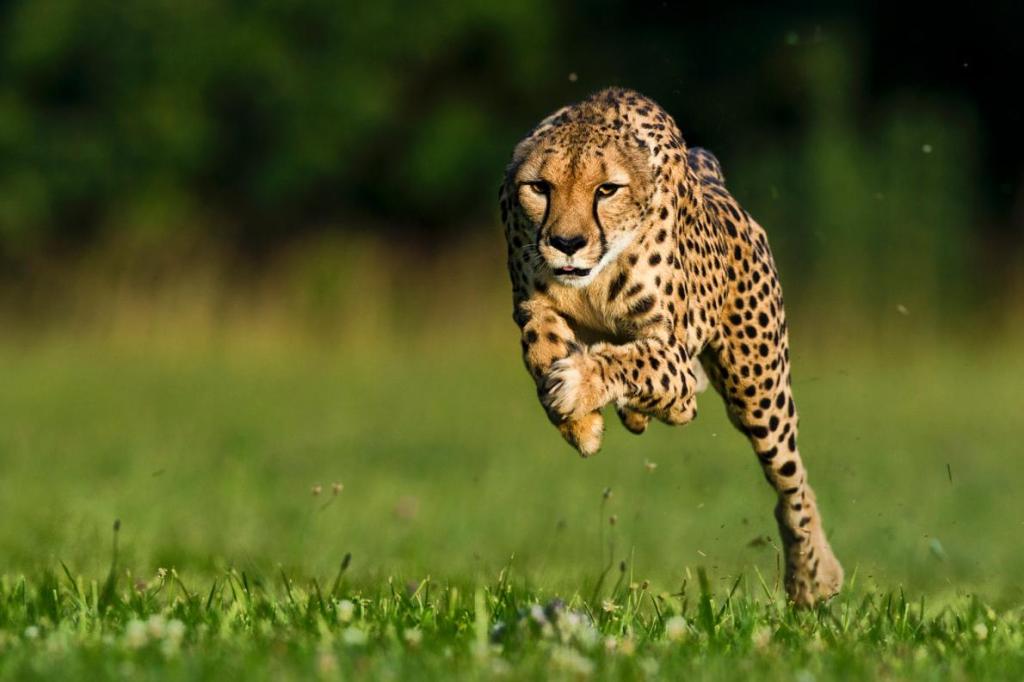
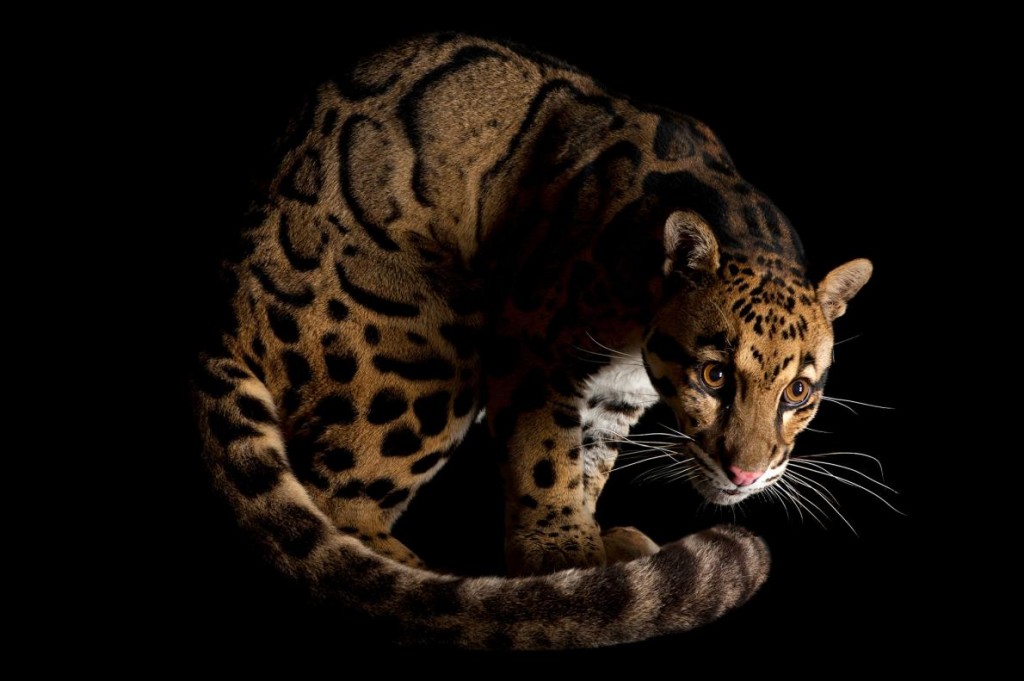
We can find the trail of panthers in many areas in Sub-Saharan Africa, South Asia, and the Middle East. They are the most widely distributed feline animals in the zoo. Panthers are smarter than Tigers and more fierce than Lions. They have the most strength among all the carnivores. Panthers are not only the most elegant but also the most dangerous animals in the jungle. There are many kinds of panthers in the world, such as the jaguar, leopard, cheetah, and clouded leopard.

Jaguar is distributed in the warm zone of North and South America. Jaguar is very good at swimming and needs water to keep it cool. Similar to leopards, they also have a body-color mutation called “blackening.” This mutant gene is dominant, that is, once the mutation appears, it appears that all-black jaguars or all-black leopards are common.

Leopard is distributed in Africa, Europe, and Asia. Leopards in the Asian rain forest are mostly blackening leopards. The change in coat color caused by recessive gene mutations allows the leopard to hide better in the forest. In the case of good illumination conditions, the spots on the panther are still visible.

Cheetah is distributed in South Africa and northern Iran. The cheetah is the fastest animal in the world, and this quickness stems from many factors. One of the factors is that the cheetah’s nostrils are wider than other cats and their nasal cavity is also bigger. Both of these features allow them to breathe more oxygen each time they run.

The Clouded leopard is distributed in Nepal in the Himalayas, Bhutan, Myanmar, India, South China, Taiwan (Taiwan clouded leopard has become extinct). Cloud leopard is very mysterious. They spend most of their time on trees, where they can hunt monkeys and birds. They also have the most difference between the size of male and female cloud leopards. The male clouded leopard is twice as large as the female clouded leopard.

Arctic Wolf

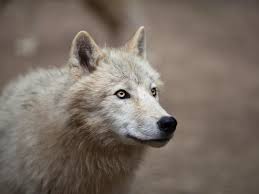
  Arctic wolf, also known as white wolf or snow wolf. They are the largest canine family in the world. Arctic wolves are survivors of the Ice Age, mainly distributed on the northern island of Canada and northern coast of Greenland. They are of medium size in carnivora. They’re fur usually appears white, gray, or black. This color makes arctic wolves easy to blend in with their surroundings, and allows them to hide and hunt.

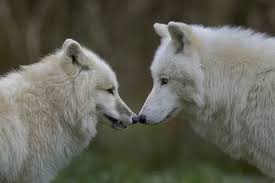
       Arctic wolf is a kind of social animal, usually composed of five to ten wolves in a well-registered wolf pack. The wolf pack is led by a powerful male wolf with a strict hierarchy. The highest-ranking female wolf can control all female wolves and some male wolves in the group. The leader of the wolves is absolutely authoritative, a dictator and the main guardian of the territory. After every hunting, the leader is the first to enjoy food, and the other wolves eat in the order of the rank within the pack. Arctic wolves are carnivorous animal, they hunt deer, fish, walrus, and rabbits, and occasionally attack humans. While hunting, the whole pack cooperates. Male leaders are responsible for directing all wolves. They choose small or young animals as their prey. Wolves usually encroach on them from different directions. They gradually approach their prey. When the time comes, they attack suddenly. If the prey escapes, the wolves will be divided into echelons and fight in turn until the prey is captured. Arctic wolves can chase prey at speeds of up to 65 kilometers per hour. They can span 5 meters in a single step in a sprint.

        Arctic wolves are very strong, they live in bleak tundra, river valleys, and icy plateaus. The living environment and climate are cold. The lowest temperature can reach – 50 degrees. Arctic wolves not only endure cold weather for a long time, but also five months of darkness, during which they often have no food for weeks. The Arctic wolf is strong enough to survive in such an environment.